8 AI Training Platforms to Make Money Online in 2026


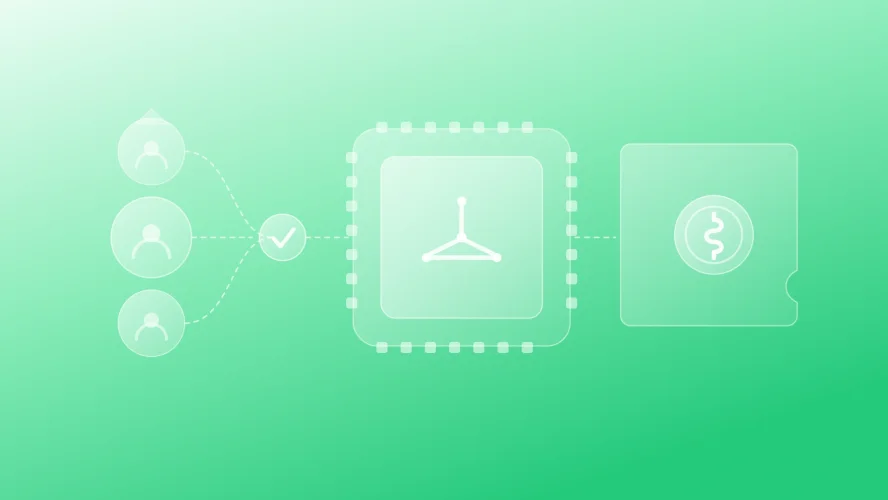

AI companies need humans to check their work. Someone has to compare two AI answers and say which one is better. Someone has to write a tricky question that would trip up a chatbot. Someone has to label a photo, transcribe a clip, or flag when an AI response gets something wrong. That human layer is called AI training, and companies pay real people to do it.
Pay and task volume shift constantly, and they depend on your skills, your schedule, and where you happen to be. A platform can also make more or fewer projects available depending on your location, since some AI training work needs data or context from a specific country or language.
We compared 8 platforms that focus on AI training jobs. We checked what each one pays, how the work actually happens, and what to check before you apply.

NodeMaven ISP proxies provide reliable IPs from targeted locations and unlimited bandwidth
What are AI training jobs?
AI training jobs are remote, freelance style tasks where you help improve an AI model by giving it feedback, data, or examples a machine cannot generate on its own. The output of your work becomes training data.
Companies building chatbots, search tools, and coding assistants need a steady supply of this human input, which is why AI training platforms have grown into a real category of online work.
What do AI trainers actually do?
Depending on the project, you might:
- Compare two AI responses and rate which one is better
- Write a difficult prompt in your area of expertise
- Label or annotate text, images, or audio
- Review search results or ads for relevance
- Review or rewrite AI generated content
- Translate, transcribe, or evaluate language quality
- Review code for correctness or style
Some of these tasks involve checking how websites and search engines respond to automated requests, which makes web scraping and browser automation relevant skills for certain AI projects.
Who can work in AI training?
Beginners with strong writing skills can start on general evaluation tasks.
Translators, students, and researchers often find language and domain specific projects.
Programmers, scientists, and other experts tend to unlock the highest paying specialist work, since companies pay more for feedback that requires real expertise.
How much can AI training jobs pay?
Pay varies enormously by task type.
- Simple microtasks might pay a few cents to a couple of dollars each.
- General AI evaluation work often lands somewhere in the ten to thirty dollar an hour range.
- Specialist and coding projects can advertise fifty dollars an hour or more.
None of these numbers are guaranteed income. Qualification time, task availability, and rejected work all affect what you actually take home, so treat advertised maximum rates as a ceiling.
8 AI training platforms that actually pay
Each platform below works differently. Some pay more per hour but offer fewer projects. Others are wide open but pay less per task. Read the full profile before deciding where to apply.
1. Outlier
Best for AI evaluation and specialized contributors
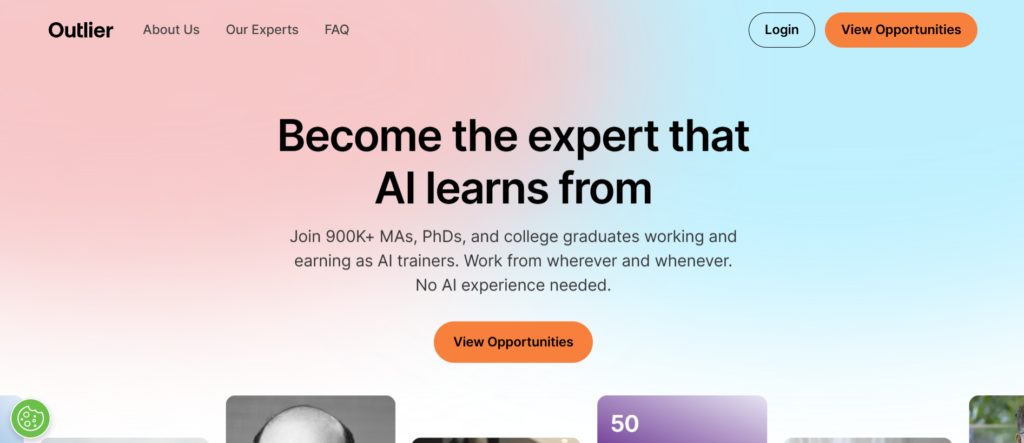
Outlier is operated by Scale AI and connects contributors, mostly called experts, with companies building large language models. It has onboarded hundreds of thousands of contributors, many with graduate degrees, though a degree is not always required. Tasks include writing challenging prompts, creating grading rubrics, rating and ranking AI answers, and specialist work in coding, STEM, and languages.
Pay: Set per project and shown before you start. Advertised rates on current listings range from around $10/hour up to $50 or more for technical work, with some expert projects advertising higher rates and a few task-based opportunities.
Requirements: Valid ID, a resume, and a LinkedIn profile. Outlier says minimum qualifications typically require undergraduate level expertise, with graduate level preferred for many opportunities.
Application: Create a profile, import your skills, verify your identity, then complete skill checks for specific projects. Outlier says onboarding usually takes thirty to ninety minutes.
Payment: Weekly, via PayPal, Airtm, or ACH bank transfer depending on eligibility.
Location availability: 🟡 Project dependent
Outlier states it works with contributors across roughly fifty countries. Which specific opportunities you can see depends on the project, the language it needs, your skills, and your location. Being able to sign up does not guarantee access to every listed opportunity.
Best for: contributors with a specific skill, language, or academic background looking for evaluation and prompt writing work.
2. Mindrift
Best for flexible AI evaluation work
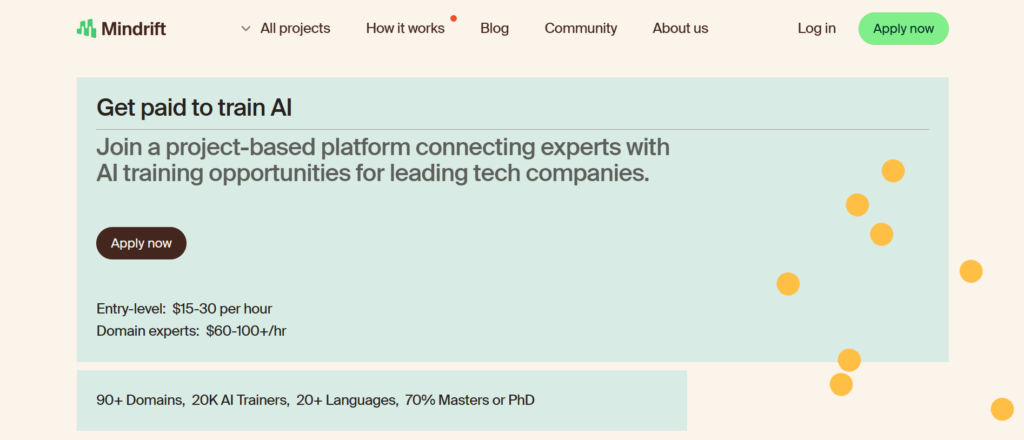
Mindrift is a generative AI training platform operated by Toloka. Contributors, called AI Tutors, complete evaluation, annotation, and content refinement tasks. Mindrift effectively runs two tiers: an open board with quick, lower paying tasks, and a higher priority board for specialists in engineering, design, or a technical domain.
Pay: Set per task and shown before you begin. Range is between $15/hour and >$100/hour depending on project complexity and domain, with specialist engineering and design roles are on the top of that range.
Requirements: Domain expertise in your field. Mindrift’s large share of contributors holds a master’s degree or PhD, though the open board accepts general contributors too.
Application: Sign up, complete a profile, and pass qualification tasks for the projects you want to join.
Payment: Processed bi-weekly, typically through PayPal or bank transfer.
Location availability: 🟡 Project dependent
Mindrift is a global marketplace, and pay for some tasks is adjusted to local cost of living. Project availability can vary based on your location, language, expertise, and current client demand, so the mix of tasks you see will not match everyone’s dashboard.
Best for: people who want flexible, project-based evaluation work and can qualify for higher paying specialist boards over time.
3. OneForma
Best for project variety
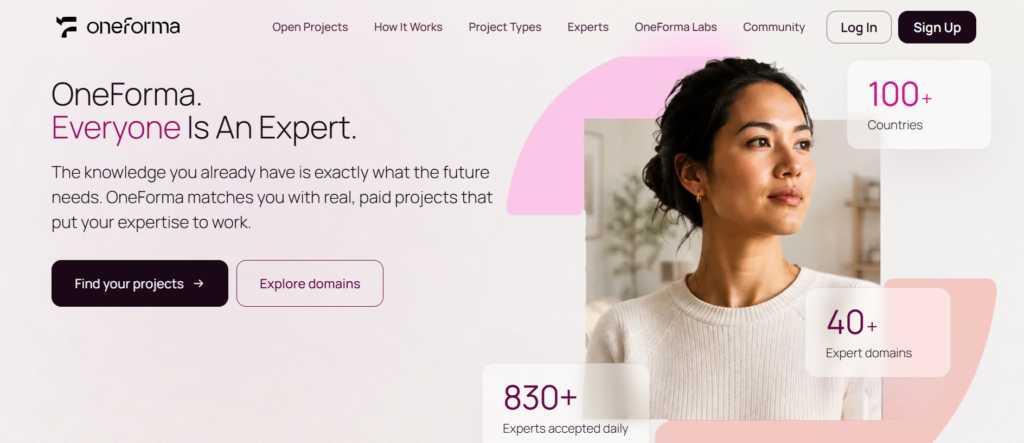
OneForma is a Centific company (formerly Pactera EDGE) that runs a project-based marketplace covering AI training, annotation, data collection, search judging, translation, transcription, and speech work. Rather than one open task feed, you apply to individual projects that rotate on a jobs board.
Pay: Set per project and shown before you accept it. Third party reports describe hourly rates commonly in the single digits to low teens for general work, with per segment or per unit pricing on some projects. Rates vary widely by task and language.
Requirements: Vary by project. Many roles are open to beginners, and language specific projects are common.
Application: Create a profile, then apply to specific open projects that match your language and location.
Payment: OneForma pays to contributors in over one hundred countries. Payoneer is a primary method, and some payment options carry annual limits, so check current details in your dashboard.
Location availability: 🟡 Project dependent
OneForma itself advises contributors to filter Open Projects by country, check every listed location, and read the full requirements before applying, since a project card can show multiple eligible countries.
Best for: contributors who want a wide mix of task types and are comfortable checking a rotating jobs board regularly.
4. Appen / CrowdGen
Best for established crowdsourcing work

CrowdGen is the contributor platform of Appen, a company that has worked in AI and machine learning data since 1996. CrowdGen replaced the older Appen Connect portal in 2024. Work includes search and ad evaluation, data annotation and collection, transcription, translation, and localization tasks.
Pay: Shown per project before you accept it, either as a per task or hourly rate. Appen paying contributors more than one hundred and fifty million dollars in a recent year, mostly in US dollars converted to local currency.
Requirements: Vary by project. Many entry level tasks need no prior experience, while longer running projects, such as search evaluation, often require passing a guidelines exam first.
Application: Create or migrate a contributor profile, fill in your skills and languages, and apply to open projects.
Payment: Bank transfer, PayPal, Payoneer, Airtm, and other options depending on your country.
Location availability: 🟡 Project dependent
Appen has decades of reach across many markets, but individual projects can target specific countries, languages, or search environments as needed by the client.
Best for: contributors who want a long-established company and steady access to microtask and localization style work.
Keep your connection stable with NodeMaven ISP proxies. Choose the location you need and maintain a consistent IP with unlimited bandwidth
5. TELUS Digital AI Community
Best for search and content evaluation

TELUS Digital runs freelance AI Community roles separate from its regular corporate careers site. Classic roles include Internet Assessor and Ads Assessor, rating search results, ads, and online content. A newer AI Community expert marketplace layer covers higher paying technical and domain expert work. You can learn more in our TELUS International AI Review.
Pay: Classic rater and assessor roles are typically country adjusted, so hourly pay differs a lot by market and reported figures for these roles commonly sit in roughly single digit to $20/hour ranges depending on location. The newer expert marketplace listings for skills like software engineering or legal review go $20-25/ hour range.
Requirements: Each role requires a subject or language specific qualification exam plus identity verification.
Application: Browse current openings on the official careers site, submit an application, and complete the required assessments.
Payment: Paid hourly based on completed and approved task volume, with schedules varying by project.
Location availability: 🟡 Project dependent
TELUS Digital operates across more than thirty countries, but classic rater positions are highly location and language specific and open positions change as new client contracts start. Always check the current official listing, since roles for a given market open and close over time.
Best for: people interested in search quality, ad relevance, or content evaluation work with a long-established company.
6. DataAnnotation
Best for higher paying specialist AI evaluation
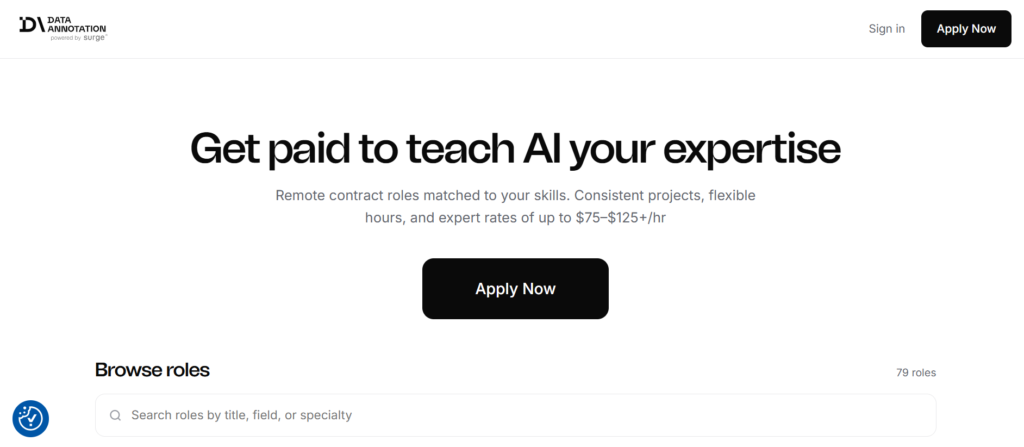
DataAnnotation is an on-demand platform for AI conversation rating, writing, coding, and general evaluation tasks. There is no fixed schedule. You complete a one-time assessment, then pick up available tasks whenever they appear in your queue.
Pay: General projects starting at $25-30/hour or more, with coding, STEM, and other professional projects advertised at $50-100/hour or more. These are not guaranteed earnings, and third-party contributor reports often describe lower typical rates for general work.
Requirements: A bachelor’s degree or equivalent real-world experience is the stated baseline for general work. You choose a Core or Coding qualification track during onboarding.
Application: Sign up, complete the Starter Assessment for your chosen track, and wait for review. There is reportedly only one attempt at the assessment, so prepare carefully before starting it.
Payment: Weekly, via PayPal.
Location availability: 🟡 Limited
Access has commonly centered on a small group of English-speaking countries. The platform’s own materials indicate that people outside current eligibility can still create an account and be notified if that changes.
Best for: contributors in an eligible market with strong writing, coding, or subject matter skills who want some of the higher advertised rates in this category.
7. Toloka
Best for beginners and microtasks
Toloka is a crowdsourcing and data platform, originally built by Yandex and now operating independently, that has been paying contributors since 2014. Work includes data labeling, classification, relevance evaluation, and other AI related microtasks, alongside larger specialist projects for more experienced contributors. Learn more in our Toloka AI Review.
Pay: Set per task. Simple labeling or verification tasks often pay a small amount per item, while longer or more complex tasks pay more. Toloka does not guarantee an hourly rate.
Requirements: Vary by task. Many microtasks require no prior experience, while specialist projects require relevant skills.
Application: Create an account, complete your profile, and start with available tasks. There is generally no lengthy screening for basic tasks.
Payment: Methods vary by country and have changed over time, so check what is currently supported in your market.
Location availability: 🟢 Generally available
Access is blocked only in a defined list of countries and territories subject to sanctions or export control rules. Outside that specific list, Toloka is working with contributors across more than one hundred countries.
Best for: beginners who want instant access to simple, low-commitment AI microtasks without a long application process.
8. Clickworker
Best for beginners and microtasks
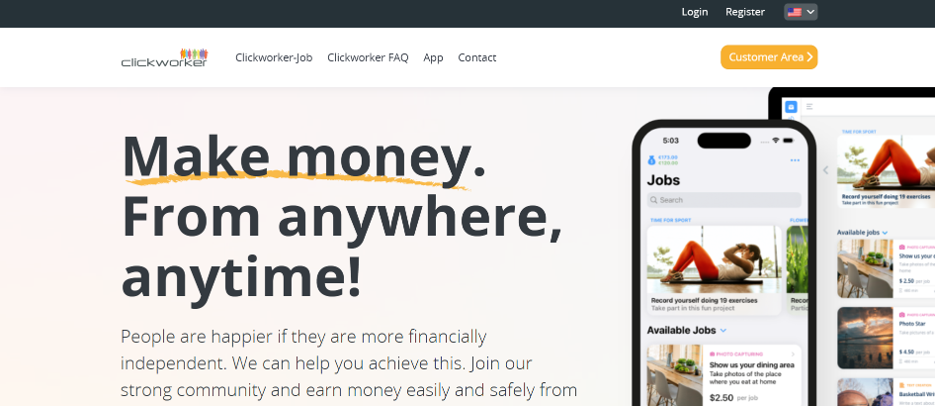
Clickworker is a German company, founded in 2005, that has paid contributors in more than one hundred and forty countries. Work spans text and image classification, data categorization, and search evaluation, with a notable connection to Microsoft’s UHRS system for higher tier search and AI related tasks.
Pay: Standard microtasks tend to pay modestly per item. Contributors who qualify for UHRS access, a separate gated tier, report meaningfully higher effective hourly pay on search evaluation and AI training style tasks.
Requirements: General signup is open to most adults. UHRS access is unlocked gradually and depends on quality scores and current invitations rather than being guaranteed at signup.
Application: Register, complete your profile and any relevant assessments, and begin with available tasks in your queue.
Payment: Bank transfer or Payoneer, depending on your country, once you reach the platform’s minimum withdrawal threshold.
Location availability: 🟡 Project dependent
Clickworker operates in a large number of countries, but which tasks and which UHRS access you see depends on location, language, qualifications, and current demand.
Best for: beginners who want a long running, well known microtask platform with a path toward higher paying UHRS work.
AI training platforms compared
| Platform | Main focus | Pay potential | Beginner friendly | Location availability | Best for |
| Outlier | Evaluation, prompts, specialist work | Medium to high | Moderate | 🟡 Project dependent | Skilled and academic contributors |
| Mindrift | AI evaluation, annotation | Low to very high | Moderate | 🟡 Project dependent | Flexible specialist work |
| OneForma | Annotation, data collection, language | Low to medium | Yes | 🟡 Project dependent | Project variety |
| Appen / CrowdGen | Evaluation, annotation, transcription | Low to medium | Yes | 🟡 Project dependent | Established crowdsourcing |
| TELUS Digital | Search and content evaluation | Low to medium | Yes | 🟡 Project dependent | Search and ad evaluation |
| DataAnnotation | General and specialist AI evaluation | Medium to high | Moderate | 🟡 Limited | Higher paying specialist work |
| Toloka | Microtasks, labeling | Low | Yes | 🟢 Generally available | Beginners |
| Clickworker | Microtasks, UHRS | Low to medium | Yes | 🟡 Project dependent | Beginners |
Why location matters for AI training jobs
· Some AI projects need local data
A lot of AI training work is not just about language. Companies training search assistants, chatbots, and recommendation systems often need to see how their product actually behaves in a specific market.
· The same platform can offer different projects
Being accepted onto a platform is not the same as seeing every available project. Access to a specific task can depend on your location, your language, your skills, the client’s requirements, current demand.
· Geographic connectivity matters
Testing a website, a set of search results, or an online service from a specific country is a normal part of building and checking location sensitive AI projects and market specific data collection. AI-powered data collection is also becoming easier with modern AI web scraping tools. Maintaining a consistent, stable online environment for that kind of testing is a genuine technical need.
NodeMaven ISP proxies combine stable connections with precise location targeting and unlimited bandwidth
How to choose an AI training platform
· Check the country and project requirements
Being able to register on a platform does not guarantee that its best paying projects are open where you live. Read the requirements for each individual project.
· Look beyond the highest advertised rate
A headline like “earn up to fifty dollars an hour” describes the ceiling, not the average. Think about total task volume and how much time qualification and review actually take.
· Check payment options
Confirm that the platform’s payment methods actually work where you live before you invest time. Some platforms cap certain payment methods or change supported options over time.
· Consider your skills
Specialist skills in coding, science, law, finance, or a particular language often unlock better paid projects.
· Read the Platform Rules
Every platform has rules around identity verification, one account per person, automation, and account sharing. Some platforms also have specific rules about VPNs and proxies for account access. Read these before you apply.
How to increase your earnings from AI training
A few habits genuinely help.
- Apply to a few platforms instead of relying on just one
- Fill out your profile completely and list every relevant skill
- Take qualification tests seriously, since a failed attempt can be costly
- Look for specialist projects that match your real background
- Track your actual time spent, not just your task count
- Keep your work setup and internet connection stable during tasks
Are AI training platforms legit?
Most platforms in this category are legitimate businesses. Signs of a genuine platform include an official company website, a clear application and qualification process, transparent payment information, published terms, and no request for any upfront payment from you.
Watch out for fake AI jobs
Scams that imitate real AI training platforms do exist, often through unsolicited messages or lookalike websites. Apply only through a platform’s official website, and treat any request for a deposit, fee, or sensitive financial detail before you have earned anything as a warning sign.
Final verdict
There is no single best platform for everyone. Outlier and Mindrift stand out for flexible, higher paying AI evaluation work if you can qualify for the right project. OneForma and Appen offer the widest project variety. TELUS Digital is a solid pick for search and content evaluation. DataAnnotation offers some of the strongest advertised specialist rates where it is available. Toloka and Clickworker remain the most accessible starting points for beginners and microtasks.
The best platform is not necessarily the one with the highest rate.