Best ISP proxies compared: top 10 providers


ISP proxies are one of the most popular proxy types in 2026. They combine residential-level trust with datacenter speed and stability, making them useful for multi-accounting, automation, sneaker bots, scraping, and AI workflows.
As anti-bot systems become more aggressive, many platforms now detect recycled datacenter IPs quickly. ISP proxies offer a more stable alternative with lower detection rates, and longer session lifespan.
However, ISP proxy quality varies a lot between providers. To find the best ISP proxies, we compared the top providers based on many criteria.
Below are the 10 best ISP proxy providers in 2026, including enterprise networks, budget options, and providers like NodeMaven focused on clean long-term sessions.

Get premium ISP proxies from NodeMaven starting at $2.99/IP with unlimited bandwidth and long sticky sessions
What are ISP proxies?
ISP proxies, also called static residential proxies, are IP addresses registered under real internet service providers like Comcast, AT&T, or Vodafone, but hosted on datacenter servers instead of residential devices.
This setup combines the main advantages of residential and datacenter proxies:
- Residential-level trust
- High speed and low latency
- Stable long-term sessions
Because ISP proxies use ISP-issued ASNs, websites treat them like real residential users. At the same time, datacenter hosting makes them much faster and more reliable than typical residential proxies.
Who needs ISP proxies and why?
ISP proxies are best for users who need stable identities, fast connections, and lower detection rates. Unlike rotating residential proxies, they keep the same IP for long periods, which makes them useful for workflows that depend on session consistency.
Account management and anti-detect browsers
ISP proxies are widely used for managing multiple accounts on platforms like Instagram, TikTok, Facebook, Amazon, and Google. Stable IPs reduce suspicious login activity and work well with multi-account platforms like Multilogin or AdsPower.
Scraping and automation
For scraping and long-running automation tasks, ISP proxy offers faster speeds and more reliable sessions than residential one. Many providers also include unlimited bandwidth, making ISP proxies more cost-efficient for large workloads.
Sneaker bots and checkout automation
Sneaker bots rely on low latency and persistent sessions during limited releases. ISP are popular for sneaker copping because they combine trust with speed.
AI automation and localized workflows
ISP proxies are also useful for AI tools, account creation, and geo-targeted testing. Static residential IPs help maintain consistent sessions across platforms like ChatGPT, Claude, and Gemini while allowing users to test region-specific responses.
Users who need a balance between price and stability
Residential proxies usually offer larger rotating pools, but ISP ones are often cheaper for long-term sessions since pricing is typically based per IP rather than per GB.
Manage accounts safely with NodeMaven ISP proxies starting from $2.99/IP and built-in IP quality filtering
ISP vs. residential vs. datacenter proxies
ISP proxies sit between residential and datacenter proxies. There is a fast comparison of all types.
| Feature | ISP proxies | Residential proxies | Datacenter proxies |
| Speed | High 🟢 | Medium 🟡 | Very high 🟢 |
| Trust score | High 🟢 | High 🟢 | Low 🔴 |
| Session stability | Excellent 🟢 | Medium 🟡 | Excellent 🟢 |
| Detection risk | Low 🟢 | Very low 🟢 | High 🔴 |
| Cost | Medium 🟡 | High 🔴 | Low 🟢 |
| IP type | Static residential | Real residential devices | Cloud/datacenter IPs |
| Best use cases | Multi-accounting, sneaker bots, automation | Large-scale scraping, geo-targeting | High-speed scraping, bulk requests |
How we selected the best ISP proxy providers
To rank the best ISP proxy providers, we compared them across the factors that matter most for real-world performance, account safety, and long-term reliability.
IP quality and fraud scores
We looked at overall IP reputation, ASN quality, and how likely proxies were to trigger blocks, CAPTCHAs, or verification requests on major platforms.
Sticky session stability
Stable long-term sessions are critical for multi-accounting, automation, and anti-detect browsers. Providers with reliable static sessions ranked higher.
Subnet diversity
Large pools do not always mean better quality. We considered subnet diversity and IP distribution to avoid providers relying heavily on recycled ranges.
Geo coverage
We evaluated the number of supported countries, city-level targeting options, and availability of ISP proxies in key regions like the US and UK.
Dashboard and proxy management
Ease of use matters, especially for teams managing large proxy pools. We compared dashboards, rotation controls, authentication methods, and setup simplicity.
Pricing and scalability
Finally, we compared pricing models, bandwidth limits, scalability, and overall value for different use cases, from individual users to enterprise teams.
Top 10 best ISP proxy providers
1. NodeMaven — best ISP proxy provider overall
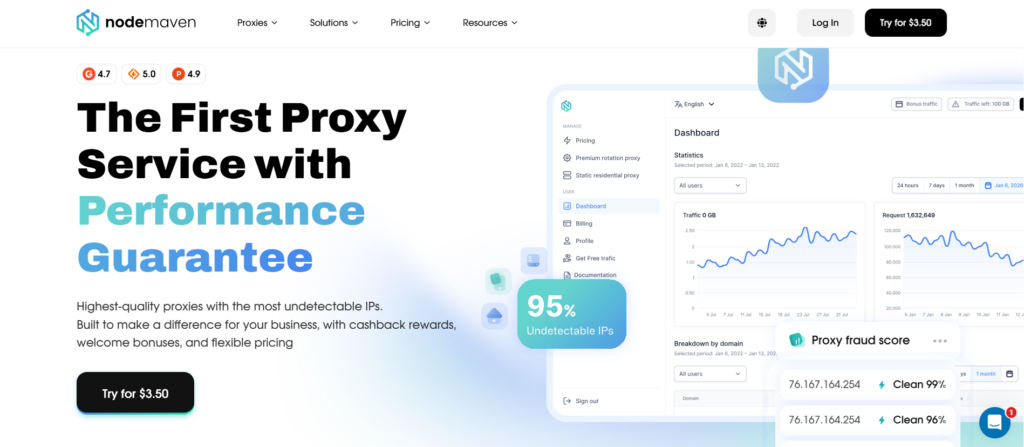
NodeMaven stands out by focusing on IP quality instead of simply advertising the largest proxy pool. NodeMaven uses a real-time IP Quality Filter that screens proxies based on fraud score, reputation, and detection risk before assigning them to users.
Another standout feature is the built-in Proxy Bandwidth Checker, which lets users monitor traffic usage directly from the dashboard.
The provider offers best ISP proxies designed for long-term stability, fast speeds, and low detection rates, making them especially effective for all use cases.
NodeMaven also offers a Proxy Quality Guarantee. If a proxy is blacklisted in Pixelscan and negatively affects your workflow, you can claim compensation for affected traffic.
Why NodeMaven ranks #1
Most proxy providers focus on raw IP count, but NodeMaven prioritizes clean IP reputation and stable sessions. This helps reduce CAPTCHAs, verification loops, and suspicious login triggers.
It also performs well with anti-detect browsers like Multilogin and Dolphin Anty thanks to long sticky sessions. That makes it one of the strongest choices for modern workflows.
Key features
- Quality Guarantee with fraud-score filtering
- ISP proxies with unlimited bandwidth
- Long sticky sessions
- Country, city, ZIP, and ISP targeting
- Built-in Proxy Bandwidth Checker
- HTTP and SOCKS5 support
- Easy proxy rotation and session management
Disadvantages
- Smaller brand than enterprise providers like Bright Data or Oxylabs
- More focused on quality and account workflows than massive scraping infrastructure
Pricing
NodeMaven offers ISP proxies with per-IP pricing and unlimited bandwidth. Price per IP starts from $2.99. The platform also includes residential and mobile proxy plans for users managing multiple traffic types.
Best for
NodeMaven is best for users who need long-lived sessions, lower detection rates, cleaner residential identities, and reliable account stability across anti-detect browsers, social platforms, AI tools, and automation workflows.
2. Bright Data — good for enterprise scraping
Bright Data is one of the largest proxy providers on the market and a common choice for enterprise scraping operations. The platform offers residential, mobile, datacenter, and ISP proxies alongside advanced scraping APIs, browser automation tools, and pre-built datasets.
Key features
- Large ISP and residential proxy pools
- Country-, city-, ZIP-, and ASN-level targeting
- Web Unlocker and scraping APIs
- Dedicated and shared ISP proxies
- Enterprise compliance and support
Disadvantages
- Expensive for smaller teams and individual users
- Dashboard and product ecosystem can feel overly complex
- Pricing becomes difficult to predict at scale
- Better optimized for scraping than account management
Pricing
Bright Data ISP proxies start around $1.80 per IP for shared plans, while enterprise plans and scraping APIs can quickly scale into hundreds or thousands of dollars per month depending on bandwidth and usage.
Best for
Bright Data is for enterprise scraping, large-scale data collection, and companies that need advanced automation tooling. For users focused on multi-accounting, anti-detect browsers, or stable long-term sessions, simpler providers like NodeMaven are often easier to manage and more cost-efficient.
3. Oxylabs — premium proxy provider
Oxylabs is a premium proxy provider focused heavily on enterprise infrastructure, large-scale scraping, and high-success-rate automation. The company offers residential, mobile, datacenter, and ISP proxies with coverage across the US and Europe.
Key features
- Large ISP proxy pool
- City- and ASN-level targeting
- Dedicated and rotating sessions
- High concurrent connection limits
- Residential, mobile, and datacenter proxies
- Enterprise support and API access
Disadvantages
- Expensive entry pricing
- Better suited for enterprise scraping than smaller workflows
- Less beginner-friendly than providers like NodeMaven or Decodo
- Setup and scaling can feel overly enterprise-focused
Pricing
Oxylabs ISP proxies start at $16 for 10 IPs, and only can be purchased as a bundle. Dedicated ISP plans and larger enterprise packages require custom pricing.
Best for
Oxylabs is best for large businesses, agencies, and enterprise scraping teams that need scalable infrastructure and advanced proxy management.
Upgrade to cleaner ISP proxies with NodeMaven from and improve session stability across AI tools, social automation and scraping
4. Decodo — proxy infrastructure for beginners
Decodo (formerly Smartproxy) is one of the most beginner-friendly ISP proxy providers on the market. The platform focuses on simple setup and an easy-to-use dashboard, making it a popular option for smaller teams and first-time proxy users.
Key features
- Dedicated static residential proxies
- Pay-per-IP and pay-per-GB pricing
- Sticky and rotating sessions
- SOCKS5 and HTTP(S) support
- Simple dashboard and quick setup
Disadvantages
- Smaller ISP infrastructure than enterprise providers
- Less focused on fraud-score filtering and IP quality control
- Dedicated ISP plans are more expensive per IP than some competitors
- Better for general automation than high-trust account setups
Pricing
Decodo dedicated ISP proxies start at:
- $10 for 3 IPs
- $29 for 10 IPs
- $56 for 20 IPs,
which is high comparing to other providers. The platform also offers rotating traffic-based plans and shared proxy options.
Best for
Decodo is best for beginners, marketers, and smaller teams that want a simple ISP proxy setup without complexity and are ready to pay more for it.
5. NetNut — provider for teams
NetNut is an enterprise-focused proxy provider offering residential, mobile, datacenter, and ISP proxies for large-scale scraping and automation. The platform is known for high-speed infrastructure, rotating and sticky sessions, and enterprise support tools.
Key features
- Rotating and static ISP proxies
- 1M+ static residential IPs
- Sticky session support
- City- and state-level targeting
- Residential, mobile, and datacenter proxies
- API access and enterprise support
Disadvantages
- Pricing is high
- No simple pay-as-you-go ISP plans
- Platform is built more for enterprise scraping than account management
- Less beginner-friendly than providers like NodeMaven or Decodo
Pricing
NetNut static residential proxy plans start at:
- $99/month for 7GB
- $250/month for 20GB
- $499/month for 50GB
Higher-volume enterprise plans scale up to multi-terabyte traffic packages.
Best for
NetNut is for enterprise teams running operations that need high-speed infrastructure. Users focused on anti-detect browsers, multi-accounting, and cleaner long-term sessions may find NodeMaven more cost-efficient.
6. Roundproxies— proxies for large-scale scraping
Roundproxies is a proxy provider focused on large-scale scraping, automation, and enterprise proxy infrastructure. The platform offers residential, mobile, datacenter, and ISP proxies with unlimited bandwidth on static plans.
Key features
- Static ISP proxies with unlimited bandwidth
- Country-, city-, ZIP-, and ASN-level targeting
- Residential, mobile, and datacenter proxies
- Sticky and rotating sessions
Disadvantages
- Dashboard can feel complex for beginners
- Better optimized for scraping than account management
- Smaller brand ecosystem compared to larger providers
- Less focused on proxy quality filtering and anti-detect workflows
Pricing
Roundproxies ISP plans start at $14 for 10 IPs.
Best for
Roundproxies is best for scraping teams and users who need flexible targeting with unlimited bandwidth.
7. Webshare — best budget ISP proxies
Webshare is one of the most affordable ISP proxy providers available, making it a popular choice for individuals, small teams, and users testing ISP proxies for the first time.
Key features
- Static residential proxies
- Dedicated and shared proxy plans
- HTTP and SOCKS5 support
- Self-service dashboard
- Residential and datacenter proxies in one platform
- Instant setup with flexible scaling
Disadvantages
- Smaller ISP proxy infrastructure
- Shared plans can have inconsistent performance
- More limited targeting compared to premium providers
- Better suited for lightweight workflows than high-trust account management
Pricing
Webshare static residential proxy pricing starts at $0.30/proxy for 20 proxies. Larger plans reduce the cost per proxy even further.
Best for
Webshare is best for budget-conscious users, small businesses, and beginners looking for low-cost ISP proxies with simple setup. Users who need cleaner IP reputation, anti-detect compatibility, and more stable long-term sessions will usually get better results from quality-focused providers like NodeMaven.
8. IPRoyal — low-cost entry option
IPRoyal is a budget-friendly proxy provider offering residential, datacenter, mobile, and ISP proxies with flexible subscription options. The platform is popular among smaller teams and individual users looking for affordable static residential proxies.
Key features
- Static residential (ISP) proxies
- Unlimited bandwidth
- Sticky sessions
- SOCKS5 and HTTP(S) support
- Flexible subscription durations
- Residential, mobile, and datacenter proxies
Disadvantages
- Smaller ISP network compared to premium providers
- IP quality can vary between locations
- Limited advanced targeting features
- Not optimized for high-trust account management
Pricing
IPRoyal ISP proxy pricing starts at:
- $1.80/proxy for 24-hour plans
- $2.70/proxy for 30-day plans
Best for
IPRoyal is best for users who want low-cost ISP proxies for short-term projects, testing, or lightweight automation.
9. Proxy-Seller — proxies with customizable plans
Proxy-Seller is a long-running proxy provider offering ISP, residential, mobile, IPv4, and IPv6 proxies with flexible rental periods and customizable plans. The platform focuses heavily on affordability and wide location coverage.
Key features
- Dedicated ISP proxies
- HTTP(S) and SOCKS5 support
- Unlimited bandwidth
- City and country targeting
- Flexible rental periods
- Residential, mobile, IPv4, and IPv6 proxies
Disadvantages
- Dashboard and UX feel outdated compared to newer providers
- Limited focus on fraud-score filtering and session quality
- Better for general proxy usage than anti-detect workflows
- Support and setup quality can vary between regions
Pricing
Proxy-Seller ISP proxy pricing starts at $3 for 1 ISP proxy. Bulk purchases receive additional discounts.
Best for
Proxy-Seller is best for users who want flexible ISP proxy plans with broad location support and unlimited traffic.
10. Geonix— Simple ISP proxies
Geonix (previously Proxy-Sale) is a budget-focused proxy provider offering ISP, residential, mobile, IPv4, and IPv6 proxies with flexible rental periods and broad geo coverage.
Key features
- Dedicated ISP proxies
- Unlimited bandwidth
- HTTP(S) and SOCKS5 support
- Country-, city-, and ISP-level targeting
- Sticky sessions
- Residential, mobile, IPv4, and IPv6 proxies
- Flexible rental durations from 7 to 360 days
Disadvantages
- Dashboard and UX feel less polished than premium providers
- Better optimized for general proxy usage than anti-detect workflows
- IP quality consistency may vary between locations
- Less focused on fraud-score filtering and account safety tools
Pricing
Geonix ISP proxies start around:
- $2.91/IP for 10 IPs
- $2.70/IP for 50 IPs
Longer rental periods and larger orders reduce the price further.
Best for
Geonix is best for users looking for affordable ISP proxies with flexible rental options and broad location coverage.
Best ISP proxies for different use cases
Different ISP proxy providers perform better depending on the workflow, budget, and level of automation. Some are optimized for enterprise scraping, while others focus on account stability, anti-detect browsers, or affordable entry pricing.
| Use case | Recommended provider | Why |
| Multi-accounting | NodeMaven | Clean IP reputation, sticky sessions, anti-detect compatibility |
| Sneaker bots | NodeMaven | Fast ISP infrastructure with stable long-term sessions |
| AI workflows | NodeMaven | Lower detection rates on browser-based AI platforms |
| Social media automation | NodeMaven | Stable residential identities for long-running accounts |
| Multi-account browsers | NodeMaven | Works well with Multilogin, Dolphin Anty, and AdsPower |
| Enterprise scraping | Bright Data | Massive infrastructure and advanced scraping tools |
| Beginners | Decodo | Simple dashboard and easy setup |
| Budget users | Webshare | Very low entry pricing |
| Flexible short-term plans | IPRoyal | Short rental periods and unlimited traffic |
| Rotating enterprise workflows | NetNut | Rotating and sticky session options |
Looking for reliable ISP proxies? NodeMaven offers clean residential IPs from $2.99/IP for automation, scraping, and AI workflows
Are ISP proxies worth it in 2026?
Yes, ISP proxies are more valuable in 2026 than they were a few years ago. Modern platforms rely heavily on behavioral analysis, IP reputation, and session consistency, which makes low-quality datacenter proxies much easier to detect.
This is especially noticeable on social platforms, e-commerce websites, anti-bot systems, and browser-based AI tools. Many services now flag recycled datacenter IPs almost instantly.
ISP proxies solve that problem by combining trust with performance. They offer faster speeds than residential proxies while maintaining stable long-term sessions that work better for multi-accounting, automation, AI workflows, and anti-detect browsers.
For users who need persistent sessions, lower detection rates, and reliable account trust, ISP proxies remain one of the best proxy types available in 2026.
Final verdict: which ISP proxy provider is best?
The best ISP proxy provider depends on your workflow, budget, and scale.
For users looking for affordable ISP proxies, Webshare and IPRoyal offer some of the lowest entry pricing on the market and work well for testing, lightweight automation, and smaller projects.
If you are new to ISP proxies and want a simple setup process, Decodo is one of the easiest platforms to start.
Overall, NodeMaven offers the strongest balance for most users in 2026. Instead of focusing only on proxy pool size, the platform prioritizes clean IP reputation, stable sticky sessions, and lower detection rates — factors that matter much more for modern workflows.
Need ISP proxies for long-running sessions? NodeMaven starts at $2.99/IP with stable infrastructure and low detection rates