Best sneaker proxies in 2026


Copping limited sneakers has never been more competitive. Nike’s queue systems have gotten smarter, Shopify merchants are running tighter bot mitigation, and SNKRS drops get cleared in milliseconds by organized cook groups running dozens of accounts in parallel. The margin between a win and a ban isn’t luck, it’s infrastructure.
The single biggest level in that infrastructure is your proxy setup. A bad IP gets you flagged before your bot even enters the queue. A dropped session mid-checkout means a lost cart. A residential IP with a burned reputation triggers Shopify’s fraud filters without a single item added to the basket.
This guide provides a clear overview of the best sneaker proxies available in 2026, including their key strengths, limitations, and the types of botting setups they are best suited for.

Run sneaker drops with clean residential and ISP proxies from $3.50 and keep sessions stable during checkout
How Sneaker Proxies Work
At the most basic level, a sneaker proxy server routes your bot’s requests through a third-party IP address, masking the origin. But the mechanics matter a lot more than that summary implies.
The request chain during a drop
When your bot hits a sneaker site, it sends HTTP/HTTPS requests that carry fingerprinting signals: IP address, ASN (the network provider), geolocation, and request cadence. Sites like Nike and Foot Locker cross-reference IPs against fraud databases, look for datacenter ASN signatures, and flag accounts that share subnet ranges with thousands of other sessions.
A proxy intercepts that chain before it reaches the target. Your bot’s real IP is replaced by the proxy’s IP. Ideally one that looks like an ordinary broadband customer in the drop’s target region.
Session persistence and cart consistency
This is where many setups start to fail. If your proxy changes IPs in the middle of a session, for example between loading the product page and submitting the checkout request, the site suddenly sees two different “users” using the same session. Shopify’s bot detection is especially sensitive to this because it checks whether the session stays tied to one consistent IP address. If the IP changes at the wrong moment, the cart can reset completely or trigger a reCAPTCHA challenge.
That’s why sticky sessions are critical for ATC and checkout tasks. Your bot needs to keep the same IP address for the entire checkout process, even if it only lasts a few minutes.
Get low-detection sneaker proxies for Shopify, SNKRS, and multi-account setups for $3.50 with 750 MB included
Why residential and ISP proxies matter for sneaker bots
Datacenter proxies used to dominate sneaker botting. That era is largely over for top-tier drops. Nike, Adidas, Supreme, Kith, and most serious Shopify boutiques have trained their fraud systems specifically on datacenter ASN ranges. AWS, OVH, and Hetzner subnets are flagged on contact.
Residential proxies: legitimacy by origin
Residential proxy IPs are assigned by real ISPs to real home users. When your bot sends requests from one, the target site sees a Comcast subscriber in Portland, not a rented server in Frankfurt. The IP carries actual browsing history in fraud scoring systems, which matters for reputation-gated drops and account warming operations.
The tradeoff is bandwidth cost and, on lower-quality networks, inconsistent speeds. Not all residential pools are equal. A recycled IP that’s been hammered through other botting operations carries a burned reputation regardless of its residential classification.
ISP proxies: the speed-legitimacy hybrid
ISP proxies (sometimes called static residential proxies) sit in a specific position: they’re physically hosted in data centers for speed, but assigned under residential ISP blocks rather than datacenter ASN ranges. The result is fiber-grade latency with residential-grade detection profiles. For time-critical operations like SNKRS drops where milliseconds count, the best ISP proxies for sneaker bots strike the right balance between trust score and throughput.
The ISP proxy category has expanded significantly in 2025–2026 as sneaker sites got better at blocking pure datacenter traffic. Most serious botters now use ISP proxies for entry tasks and residential IPs for account warming, with session length tuned to each phase.
Best sneaker proxies in 2026
1. NodeMaven — Best for multi-account operations and session stability
Proxy Types: Residential, ISP (static residential), Mobile (5G/LTE)
Pool Size: 30M+ filtered IPs across 190+ countries
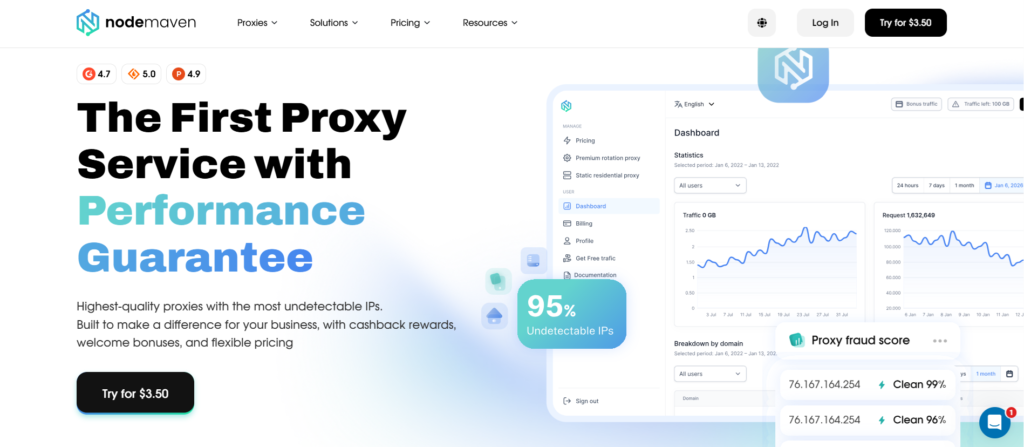
NodeMaven’s core differentiator isn’t pool size — it’s IP quality filtering. 95% of IPs in the network carry clean records, which is a meaningful claim in a market where most providers recycle burned IPs through their residential pools without scrubbing.
Sticky sessions run up to 24 hours. Genuinely useful for the account warming phase that precedes a major drop. Keeping the same IP across multiple account login events, browsing sessions, and wishlist interactions is what makes an account look aged. Most providers cap sticky sessions at 30 minutes or a few hours.
For multi-account sneaker purchasing, NodeMaven’s residential proxies provide the geographic precision needed: ZIP-level targeting in 190+ locations means each account profile can be anchored to a specific zip code rather than a generic city-level assignment that looks inconsistent to fraud systems.
NodeMaven’s ISP proxies add a speed layer when the queue opens.
The quality guarantee and cashback policy is another practical signal: NodeMaven backs IP quality with a refund mechanism rather than just marketing language, which matters when you’re paying per GB on drops that may burn through bandwidth quickly.
Mobile proxies (5G/LTE) cover the SNKRS app side of operations — useful for iOS and Android bot tasks where mobile ASN classification adds a credibility layer beyond what standard residential pools provide.
Strengths: Filtered IP quality, 24-hour sticky sessions, ZIP-level targeting, ISP + residential + mobile stack, quality guarantee, low detection rates
Limitations: Premium pricing versus bulk-pool competitors
Best for: Multi-account sneaker purchasing, account warming, Shopify ATC, SNKRS mobile drops, regional EU/US drop targeting
Starting price: From $3.50 (trial)
2. Bright Data — Enterprise scale, complex pricing
Proxy Types: Residential, ISP, Mobile, Datacenter
Pool Size: 150M+ IPs
Bright Data operates the large proxy network and has sneaker-botting utility at enterprise scale. The infrastructure is built for volume and running dozens of bots.
The platform’s proxy management tools also include session controls that most mid-tier providers lack, making it easier to coordinate timing across multiple bot tasks.
Where it gets complicated is cost and structure. Pricing is consumption-based with tiered rates, and at smaller scale the per-GB cost is steep compared to alternatives. The dashboard is built for enterprise procurement teams, not individual botters. The setup process can be difficult for new users, and support is geared more toward enterprise clients than fast replies right before a sneaker drop.
Strengths: Massive pool, strong uptime SLA, proxy manager tooling, global coverage
Limitations: Expensive at lower volume, complex pricing, onboarding overhead
Best for: Large-scale cook groups, enterprise resellers, multi-region simultaneous drops
3. Oxylabs — Strong residential pool, better for scraping than botting
Proxy Types: Residential, ISP, Mobile, Datacenter
Pool Size: 175M+ claimed residential IPs
Oxylabs positions itself as a data collection platform first, with proxies as the delivery mechanism. The residential network is large and geographically diverse. ISP proxy coverage is available across US and EU.
The practical limitation for sneaker botting specifically is that Oxylabs’ network wasn’t purpose-built for cart/checkout latency optimization. The infrastructure performs well for scraping and price monitoring, tasks where a 200–500ms variance doesn’t matter. In a Nike queue or Shopify flash sale where drop timing is measured in seconds, that variance is more consequential.
Session length options are available but the platform’s defaults lean toward scraping use cases. Botters have to configure session behavior explicitly, and the tooling feels less tuned for ATC workflows than alternatives.
Strengths: Huge pool, solid uptime, good API documentation, strong for EU residential coverage
Limitations: Not optimized for checkout latency, higher pricing tier, scraping-first product design
Best for: Sneaker site monitoring, restock alerts, price tracking, pre-drop research
Test high-quality residential, ISP, and mobile proxies before your next sneaker drop for just $3.50
4. IPRoyal — Budget residential with decent ISP options
Proxy Types: Residential, ISP (Datacenter), Mobile
Pool Size: 32M+ residential IPs
IPRoyal occupies the value tier of the residential proxy market. For botters who need to spread budget across a large number of sessions, IPRoyal’s per-GB pricing makes sense. The ISP proxy catalog has grown and covers major US cities used in Nike and Foot Locker drops.
The quality control concern is real at this price point. Residential IP freshness is inconsistent across different pool segments. Some IPs carry notable fraud history that surfaces in Shopify’s fraud analysis. For drops on high-protection targets (SNKRS, Supreme, high-demand Shopify boutiques), burned IPs mean wasted bandwidth.
Sticky sessions top out at shorter durations than premium providers, which creates friction for account warming workflows requiring consistent IP assignment over multiple days.
Strengths: Competitive pricing, growing ISP catalog, decent US residential coverage
Limitations: Variable IP quality, shorter sticky session limits, less reliable on heavily protected drops
Best for: Budget Shopify botting, mid-tier drops, testing new bot configurations without burning expensive proxies
5. Decodo — Solid mid-tier with good US coverage
Proxy Types: Residential, ISP (static), Mobile, Datacenter
Pool Size: 115M+ residential IPs
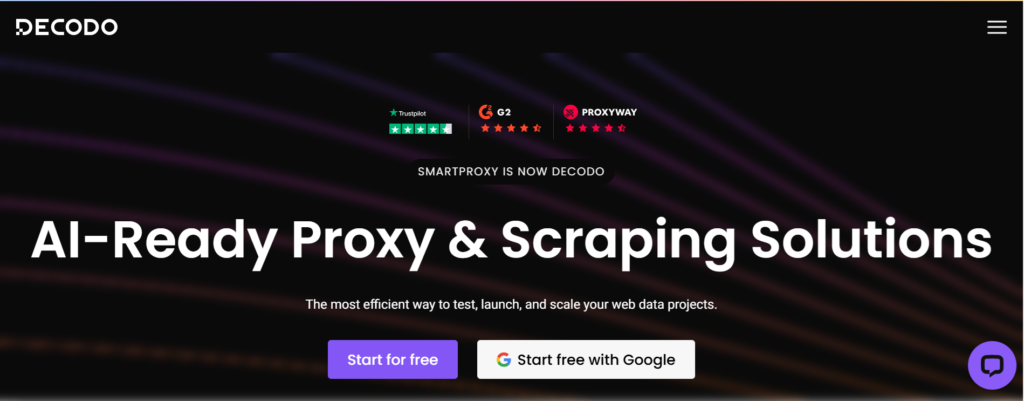
Decodo has built a reputation as the practical mid-market choice, better than pure budget providers, cheaper than enterprise platforms. For the best proxies for sneaker botting at mid-scale, Decodo covers the basics well. US residential coverage is strong, ISP proxies are available in key drop cities, and the dashboard is clean enough for solo botters or small groups to manage without dedicated technical overhead.
The static residential (ISP) offering supports longer sessions, relevant for account operations that span multiple days. SOCKS5 support works cleanly with most major sneaker bots.
Where the ceiling shows up is in IP filtering precision. The network doesn’t advertise the same level of active fraud-score filtering as premium providers, and at scale you’ll encounter some IP churn in terms of quality. For consistently high-value drops where every task represents real resale value, the quality variance is a cost.
Strengths: Good US coverage, clean dashboard, ISP proxy availability, SOCKS5 support, competitive mid-tier pricing
Limitations: Less aggressive IP quality filtering, pool can show inconsistency on premium drops
Best for: Mid-tier Shopify drops, Nike raffles, entry-level SNKRS botting, cook group members on a budget
Sneaker proxy comparison table
| Provider | Proxy Types | Sneaker Bot Use Case | Sticky Sessions | Geo Targeting | Starting Price | Best For |
| NodeMaven | Residential, ISP, Mobile | Multi-account, ATC, SNKRS, Shopify | Up to 24 hours | ZIP-level, 190+ countries | From $3.50 (trial) | Account warming, multi-account ops, quality-sensitive drops |
| Bright Data | Residential, ISP, Mobile, DC | Large-scale cook group ops | Up to 30 min (residential) | City-level, global | ~$5–8/GB (residential) | Enterprise-scale simultaneous drops |
| Oxylabs | Residential, ISP, Mobile, DC | Monitoring, restock, research | Up to 30 min | City-level, 195+ countries | ~$5–8/GB (residential) | Pre-drop intelligence, scraping, price tracking |
| IPRoyal | Residential, ISP, Mobile | Budget Shopify, mid-tier drops | Up to 24 hours (residential) | City-level, 195+ countries | ~$7/GB (residential) | Cost-conscious botters, lower-protection targets |
| Decodo | Residential, ISP, Mobile, DC | Nike raffles, Shopify, mid drops | Up to 30 min (residential) | City-level, 195+ countries | ~$8.5/GB (residential) | Mid-market operations, solo botters |
Use premium sneaker proxies with ZIP-level targeting and 24-hour sticky sessions from $3.50
How to Choose Sneaker Proxies
The right proxy setup depends on which part of the operation you’re running. Here’s how to think through the decision:
Match proxy type to task
Account creation and warming demands consistency. The same IP should be attached to an account across its initial registration, email verification, address addition, and first browsing sessions. Rotating proxies destroy the behavioral pattern that makes accounts look legitimate. Use sticky residential or ISP proxies with session durations measured in days.
Checkout and payment require absolute session stability. Any IP change between cart and payment is a detection signal on most stores. Sticky sessions are mandatory here, not optional.
Evaluate IP quality, not just pool size
A 100+M IP pool means nothing if 30% of those IPs have been used and abused across botting operations for the past two years. What matters is the fraud score distribution of the active pool. Providers that filter IPs before rotation, actively removing addresses with elevated detection risk, produce better results on protected drops than larger but unfiltered networks.
Think about geographic precision
Nike SNKRS drops are region-locked. EU Jordans don’t sell through US checkout flows. Shopify boutique drops are frequently geo-gated at the storefront level. City-level proxy targeting is the floor, ZIP-level control gives you the ability to keep account geography internally consistent, which matters increasingly as Shopify’s fraud detection has gotten more granular about location-account consistency.
Don’t over-optimize for price per GB
Per-GB pricing looks straightforward until you factor in IP quality. A cheaper proxy that gets flagged 40% of the time costs more in wasted bandwidth and lost tasks than a more expensive proxy that converts. Run a small test batch on your target site before committing large bandwidth to any provider.
Conclusion
Proxy quality is where most sneaker botting setups either hold together or fall apart. The operational requirements have all gotten more demanding as sites have improved their detection infrastructure.
For most botters in 2026, the best sneaker proxies combine filtered residential IPs for account operations with ISP proxies for time-critical queue and checkout tasks. NodeMaven’s combination of 95% clean-record IPs, 24-hour sticky sessions, ZIP-level targeting, and a quality guarantee across residential, ISP, and mobile proxy types covers that full stack without requiring multiple providers.
Start with the $3.50 trial, run it against your target sites before a major drop, and build from there.